March 11, 2026
Lost and Found: The Light that Shines Through Endangered Crafts
Across the world, thousands of traditional crafts are disappearing as mass production replaces handmade knowledge. From Sicilian puppet making to Japanese umbrella crafting, many of these heritage practices survive only through the dedication of master artisans. At VAWAA (Vacation With An Artist), travelers can learn these endangered crafts directly from artists in their studios, participating in immersive apprenticeships that preserve cultural knowledge while keeping these traditions alive.
The Mystery of the Lycurgus Cup
To understand why preserving traditional crafts matters, it helps to look at the past.
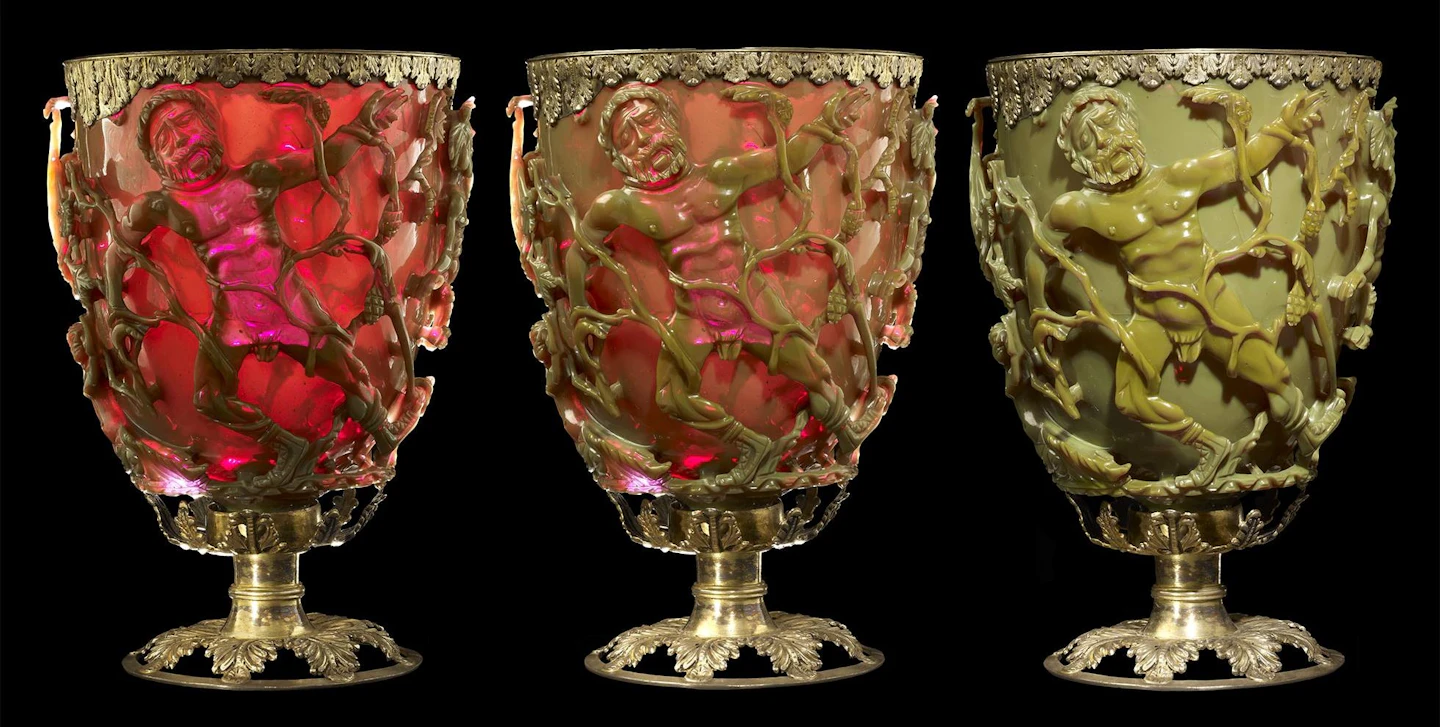
One remarkable example is the Lycurgus Cup, a 4th-century 4th AD celebratory Roman vessel, made using an early form of nanotechnology.
Roman glassmakers mixed colloidal gold and silver particles into glass, creating what is known as dichroic glass. The result is extraordinary: when backlit, the cup shifts from a deep green to a glowing amber red.
The method used to achieve this exquisite finish is not known. We can only make educated guesses as to how much gold and silver dust was dispersed throughout the material. How practiced were these glass makers at this particular technique? Was this seemingly magic color trick a happy accident, or a feat of scientific brilliance, with a fair few predecessors achieving varying degrees of the same success?
The mystery itself becomes part of the marvel.
Of course with modern technology it’s possible to replicate the green-to-reddish-amber glass; But it’s a scientific mimicry of an effect. Not the result of a craftsman’s imagination-fueled tinkering. The trick of light and gold dust feels as intertwined with the passionate mood of the myth depicted in the silver vines that twist around its central figures.
That single artifact hints at something larger: a journey of artistic development that once existed is lost to the sands of its fallen civilization.
The Disappearing World of Heritage Crafts
Other once commonplace crafts have fallen or are falling to the wayside as the world’s demands change and fast convenience.
Plastic shopping bags replace handwoven baskets, and the small boats once depended on by coastal communities no longer need to be pushed out and filled with fish.
While these objects may not carry the gilded glamour of Roman glasswork, the world of endangered crafts is vast and culturally rich. Natural materials shaped by skilled hands—wood, clay, fiber, bamboo—carry generations of practical wisdom.
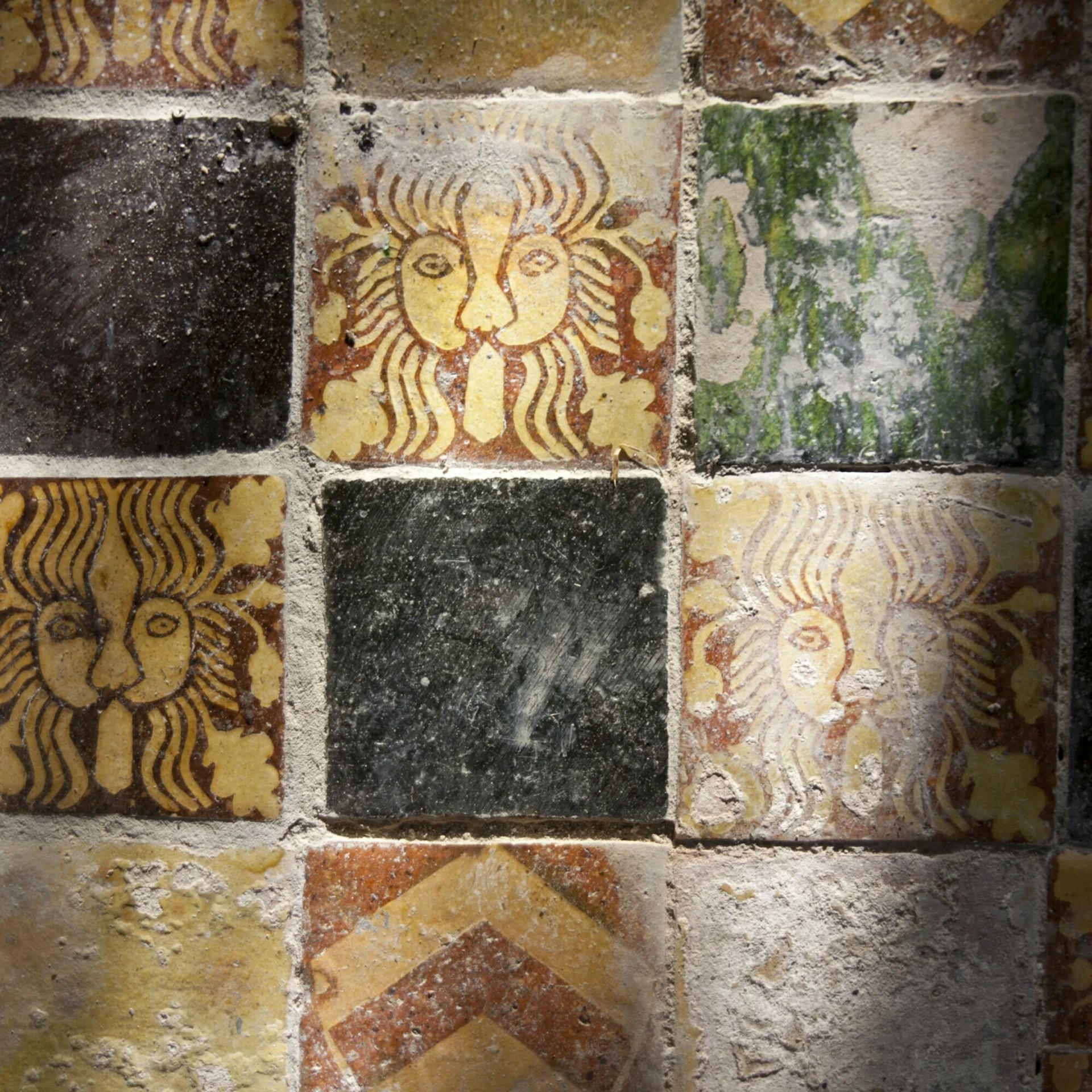
Medieval square tile mosaic at All Saints, Icklingham, Suffolk © Andy Marshall Via Churches Conservation Trust
Take for example encaustic tiles - if you’ve traveled around the British isles and stumbled into any ancient Abbey’s you’ll find these patterned tiles still vibrant and defined underfoot, despite being centuries old.
Achieved by combining two colors of clay, the formation means that the pattern remains no matter how worn. Despite its beauty and durability, allowing us to look back in time when we stumble upon them, mastery is hard to find and fast fading.
Preserving these traditions is central to the mission of VAWAA.
Rather than observing from afar, guests learn through hands-on apprenticeships, participating in the movements, materials, and rhythms that define each craft tradition.
We simply don’t want to accept that deep hands-on knowledge will be lost to time. As we scope out new creative getaways around the globe we feel an urgency to reach out to those crafts clinging on to the changing times by aged fingertips.
The Modern Imbalance
Many great thinkers and writers have spoken about the negative tolls that come with prioritizing convenience and the marginalization of slow craft. Nowadays we scroll through a dozen or so posts/reels/substack thinkpieces, reacting to the rise of AI and/or how normalised it’s become to spend days looking at different screens. We ponder and react to reactions to liquid modernity and technological dependency, such as ‘trad wife’ lifestyles, ‘going analogue’. and those who turn to eastern philosophies to practice ‘slow living’.
We can become a bit numb to the constant churning of opinions and aspirational lifestyles. Nevertheless that baseline truth resonates. If, on the macro, we have a mass imbalance of speed and convenience and technology over slow, intentional, handcraft - that imbalance will reflect on an individual ‘micro’ level.
For many people, learning a traditional craft offers a powerful counterbalance.
When considering the practical movements, materials, actions, uses and time taken to create; a steady peace slows our minds and elevates our imaginations.
The following three craft masters carry the slow magic of the old world, and its practical wisdom, forward into our present day.
Artists Preserving Endangered Crafts
1. Learn Traditional Sicilian Puppet Making with Master Artisan Daniel

VAWAA artist Daniel adding the finishing touches to a mesmerising new character.
The story of Opera de Pupi, or ‘Opera of the Puppets’ certainly fills traditional craft lover’s hearts with hope for the future. It is a traditional Sicilian form of theatrical storytelling, featuring very opulent character puppets in stunning period attire.
It dates back to the early 19th century and has suffered declines in historical chapters such as the cinema boom of the 1930s, and the turning away from traditional cultural practices as more people abandoned village life in the 1950s and 60s.
Thankfully in 2001 it was declared a “Masterpiece of the oral and intangible heritage of humanity" by UNESCO, protecting and revitalising the craft for future generations.
VAWAA artist Daniel is a third generation puppeteer and artisan. His dedication to the intricate craft of Sicilian puppetry is supported by his approach to his craft as a “cultural responsibility”. Alongside his parents in their historic workshop, their creations are truly layers of crafting marvels; from the uniquely expressive clay sculpted faces to the ornate garments and the lifelike movements of the limbs.
2. Appalachian Broom Making with Brenda: Learning a Traditional American Craft

Everyday magic in Pocahontas County, West Virgina.
This artisan’s approach to heritage craft preservation elevates a household necessity to a true art form. The folk of the southern mountains have been crafting brooms made from fallen materials found in the abundant forests for centuries. What was once a routine activity - deftly binding broomcorn to hickory and maple often with beautiful patterns in colored thread - has fallen by the wayside in the wake of mass production.
Since the early 90s VAWAA artist Brenda has been perfecting the movements of the craft. Born from the meditative weaving, plaiting, shaping and pulling come an array of distinctly Appalachian brooms.
There is something comforting about the tactile nature of a handcrafted broom. It’s been made with intention, deliberation and rhythm but unlike other more traditionally regarded artistic masterpieces it’s meant to be held. It is built for durability and use while also being beautiful and decorative.
In a world of short attention spans, with eyes increasingly trained to dart from one shiny thing to another, it’s an illuminating reminder that wood is far more rare than diamonds in our ever expanding universe.
3. Kyo-Wagasa: Learning Traditional Japanese Umbrella Making in Kyoto

Traveling through time in VAWAA artist, Kotaro's Kyoto studio.
“Tradition is a continuous process of innovation” says VAWAA artist Kotaro. Looking up at the spiraling bamboo framework of his traditional Japanese umbrellas you might consider the turning wheel of time that led to their creation. This practice, called Kyo Wagasa, began in the edo period.
Kotara, a 5th generation, award winning steward of heritage craft invites curious travelers to learn from and alongside him. Through this hands-on apprenticeship, a seemingly simple object of shelter is transformed into a marvel that carries centuries of history.
In the 170-year-old Kyoto studio, artisans still split bamboo, stretch washi paper, and brush on layers of oil using techniques that have been practiced for centuries. Each rib is measured and assembled by hand, and the umbrella is opened and closed again and again until it moves smoothly.
When you hold a Kyo Wagasa, you’re not just holding a functional object, but the result of many generations refining the same set of movements. Craft has a way of connecting us across time. Through repeated actions—cutting, binding, folding—we end up interacting, in a small way, with the people who practiced the same craft long before us.
Reimagining the Future of Craft
The modern slow-craft movement is an attempt at interpreting language, at decoding ancient wisdom. It’s human nature to create. We listen, we process, we speak. We live, we dream, we create. Some languages and their specific intonations have faded but the feelings remain, we can still listen out for them, find inspiration and echo back.
Ivan Illich described the imaginations of people as having been “industrially deformed to conceive only what can be molded into an engineered system of social habits that fit the logic of large-scale production.”
For those seeking to reconnect with creativity, materials, and cultural heritage, VAWAA offers immersive apprenticeships with master artisans around the world.
By participating in these practices, we do more than admire endangered crafts—we help carry them forward.
Explore all our curated artist apprenticeships worldwide and book one today.
Subscribe to our weekly newsletter to stay inspired with new artist stories and creative apprenticeships.