September 18, 2026
Make more accidents. Find eccentricity.
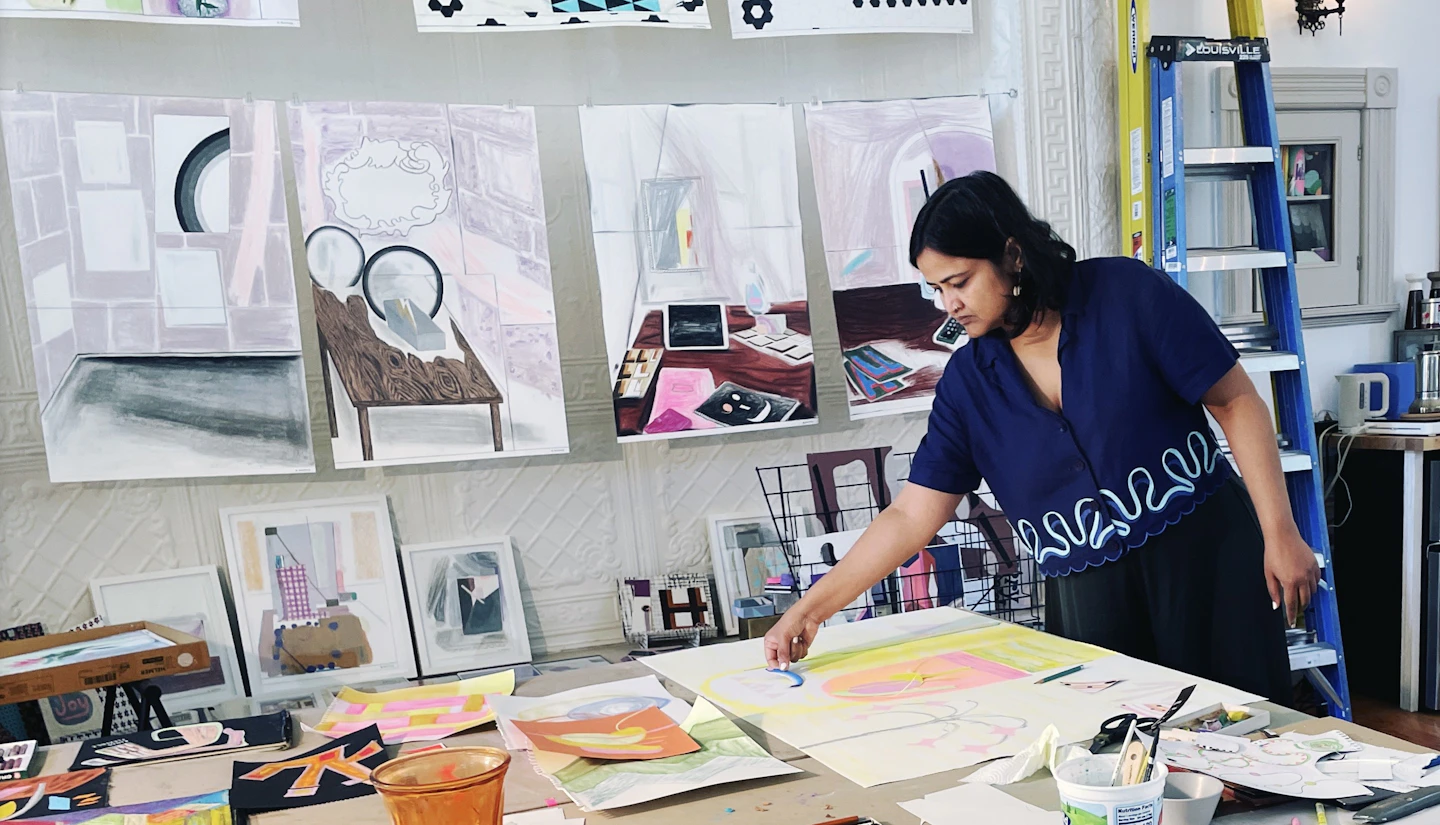
By Geetika Agrawal
On my three day mini-apprenticeship with multidisciplinary artist Michelle in Sharon Springs, New York, and what I discovered about creativity, friction and grounding.
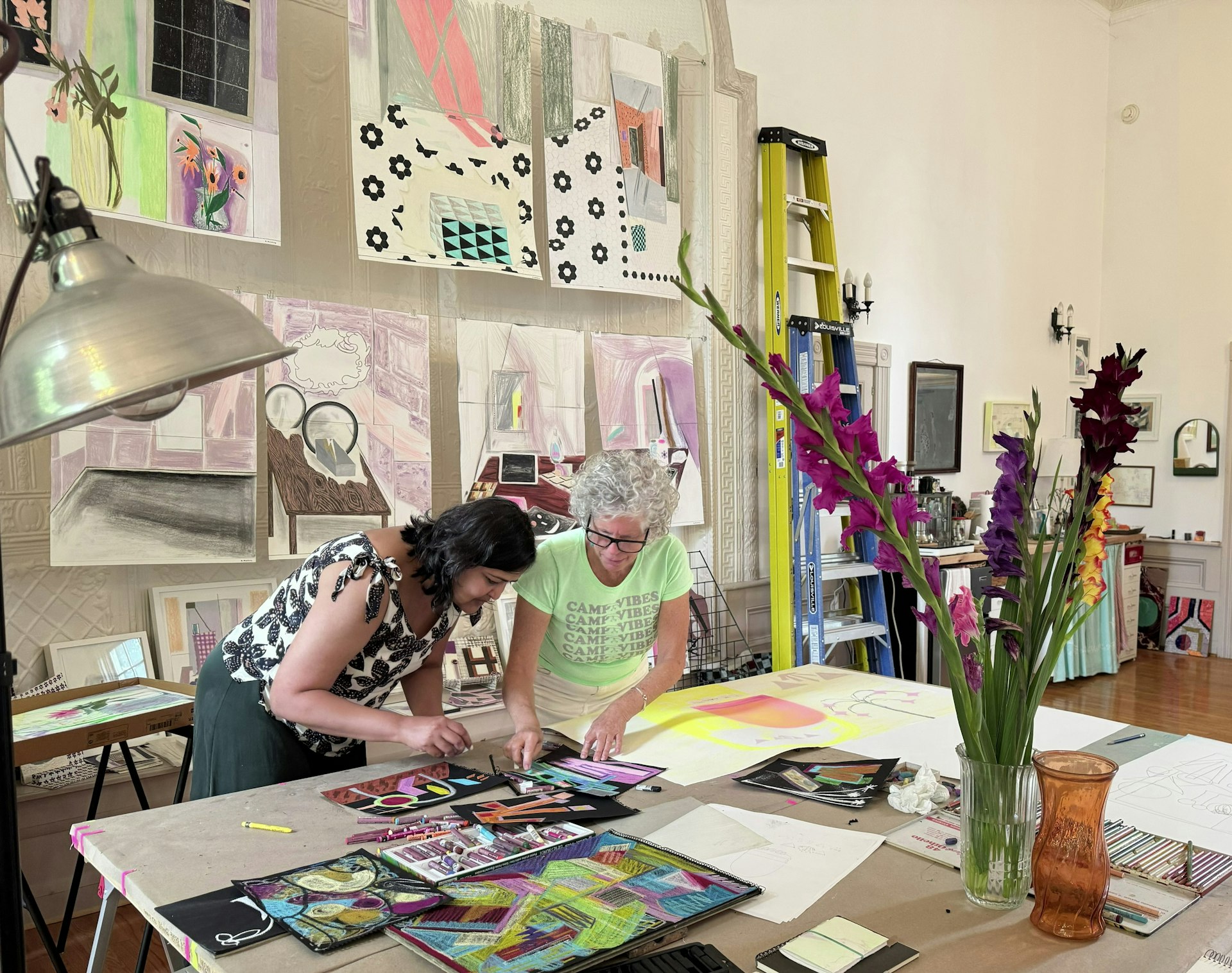
This is Michelle and me in her studio in Sharon Springs, New York, during my VAWAA.
Most of my days are spent solving problems and thinking about what needs to happen next. I wanted a few days where I could get out of my head and into my body. I felt drawn to drawing, painting and color because I wanted to express without getting bogged down by technique.
And I didn’t want to go very far.
Sharon Springs is only a few hours from New York City. I was craving something simple: sun, grass, movement, good food, and time to make things.
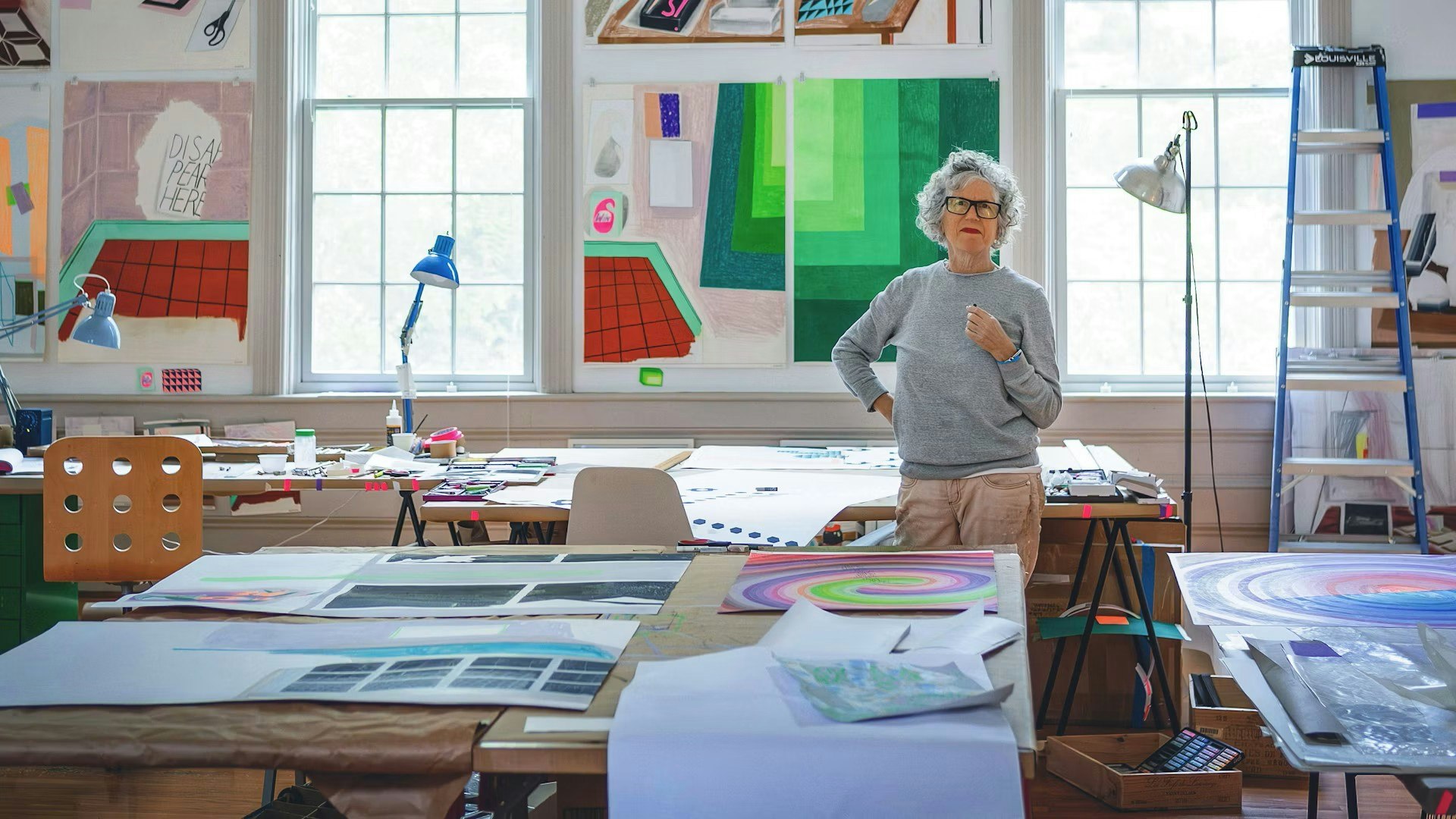
Michelle in her studio, an 1850s Greek Revival church.
Michelle is a multidisciplinary artist with more than 40 years of experience across drawing, painting and public art. I’ve been drawn to Michelle’s VAWAA, her work, and her approach from the beginning. I like the freedom, the scale, the colors, the marks, the way things feel experimental but still deeply considered. I wanted to learn from her process and see what it might open up in my own.
I took Amtrak from Penn Station to Albany, and Michelle picked me up there. We had almost an hour together in the car before reaching Sharon Springs, which gave us time to talk and get to know each other.
Her studio is inside an 1850s Greek Revival church surrounded by farmland. It has tall glass windows, high ceilings, chandeliers, big worktables, and trees visible outside. It was an inspiring place surrounded by Michelle's work and tons of art supplies. Felt lucky to have the chance to be guided by someone with that depth of practice.
On the first day, we started with charcoal.
I don't have much experience working with charcoal. I didn’t realize charcoal itself could have so much range. Different blacks. Different softness. Different marks depending on whether I used the side of it, the edge, a thin twig, more pressure, less pressure.
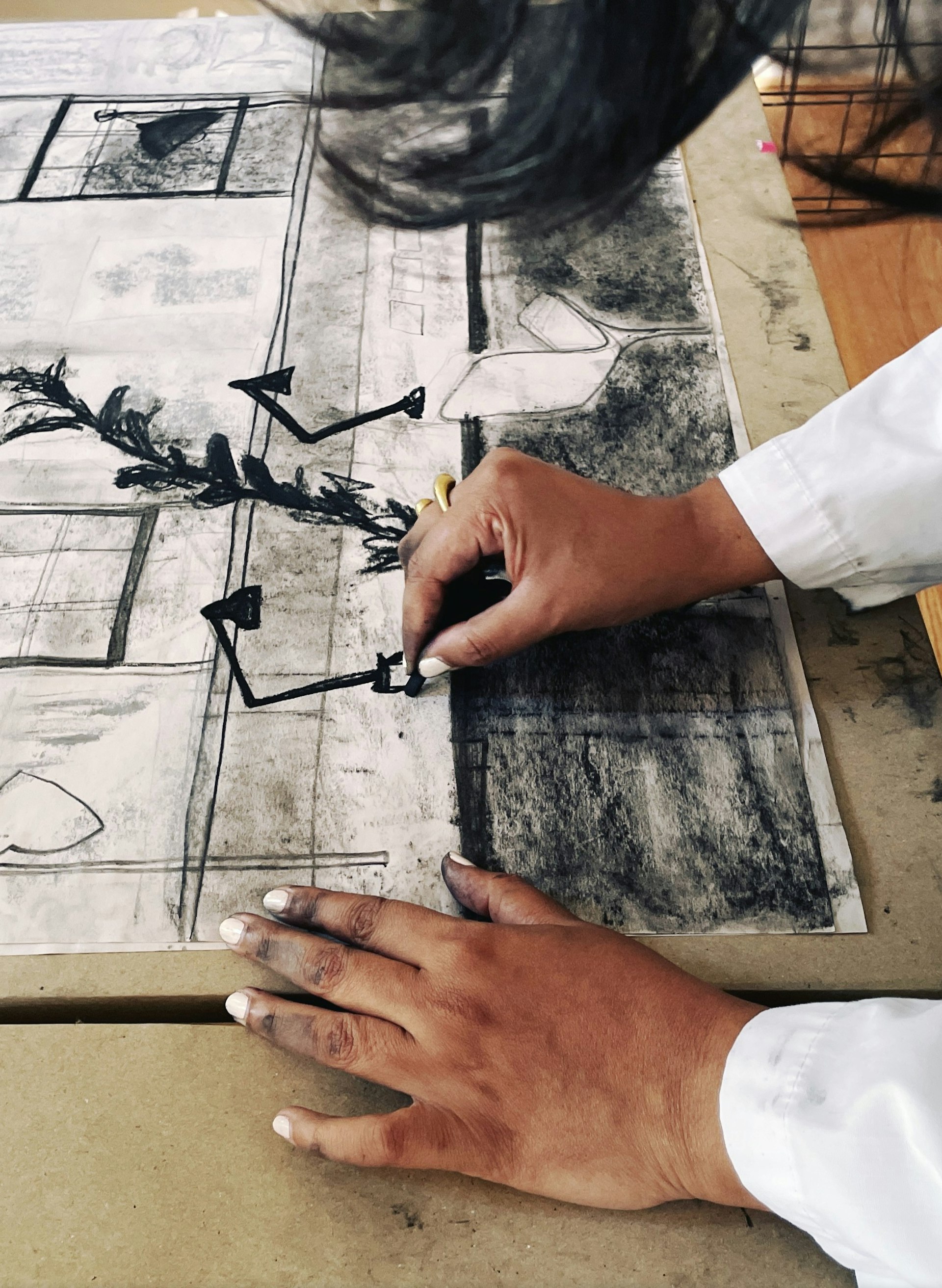
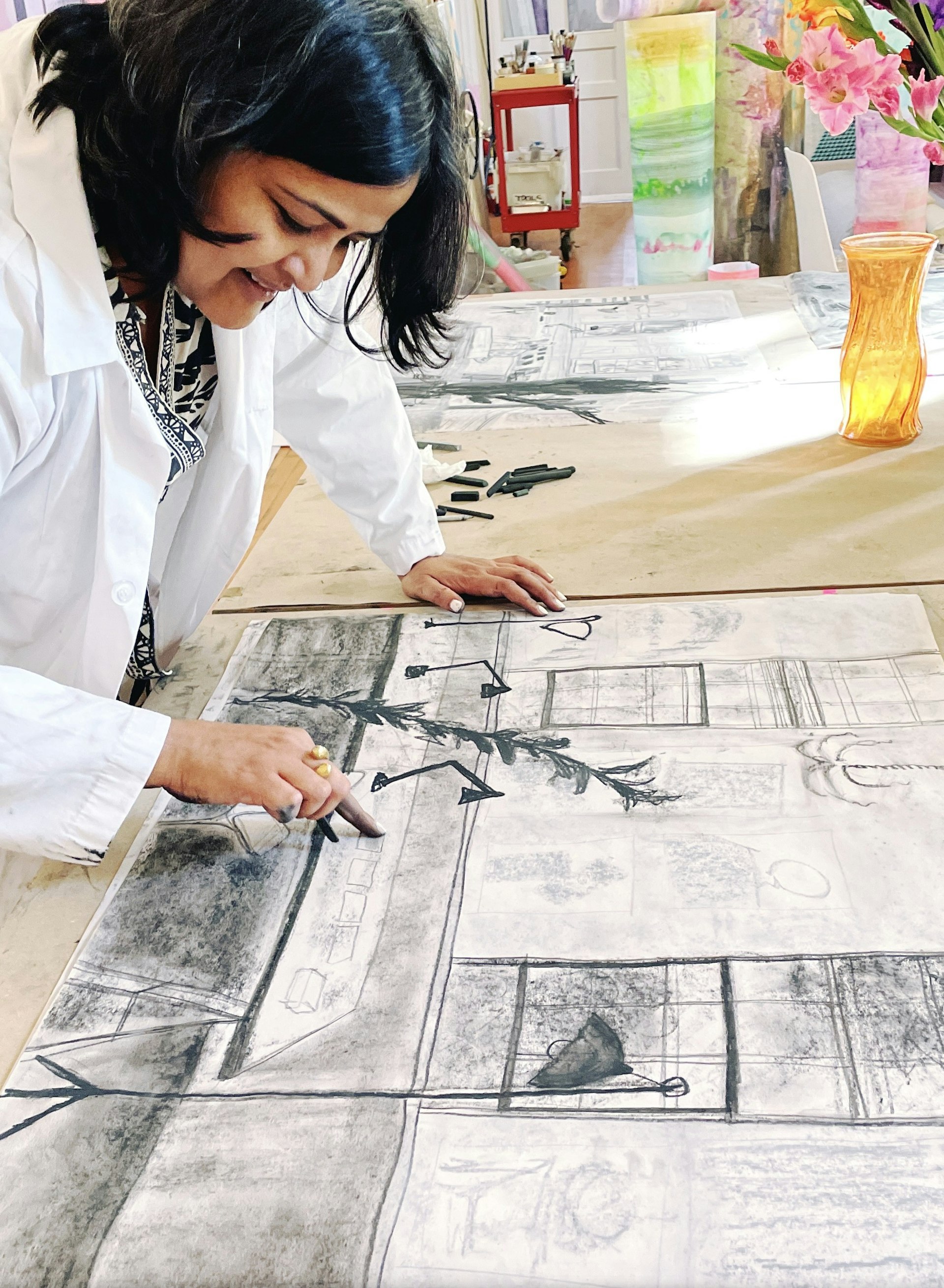
One stick of carbon, so much to learn.
I liked that Michelle kept referring to it as a “tool.” Instead of thinking, “Can I draw what I want?” I started thinking, “What can this tool do?”
Michelle kept giving me exercises that disrupted the way I would normally approach an image: drawing with charcoal, oil pastels, crayons, pencils, watercolors; working on black paper; creating accidents; finding eccentricity; changing scale; making unfamiliar marks; cutting things apart and recombining them. Again and again, I found myself making something I could never have imagined making beforehand.
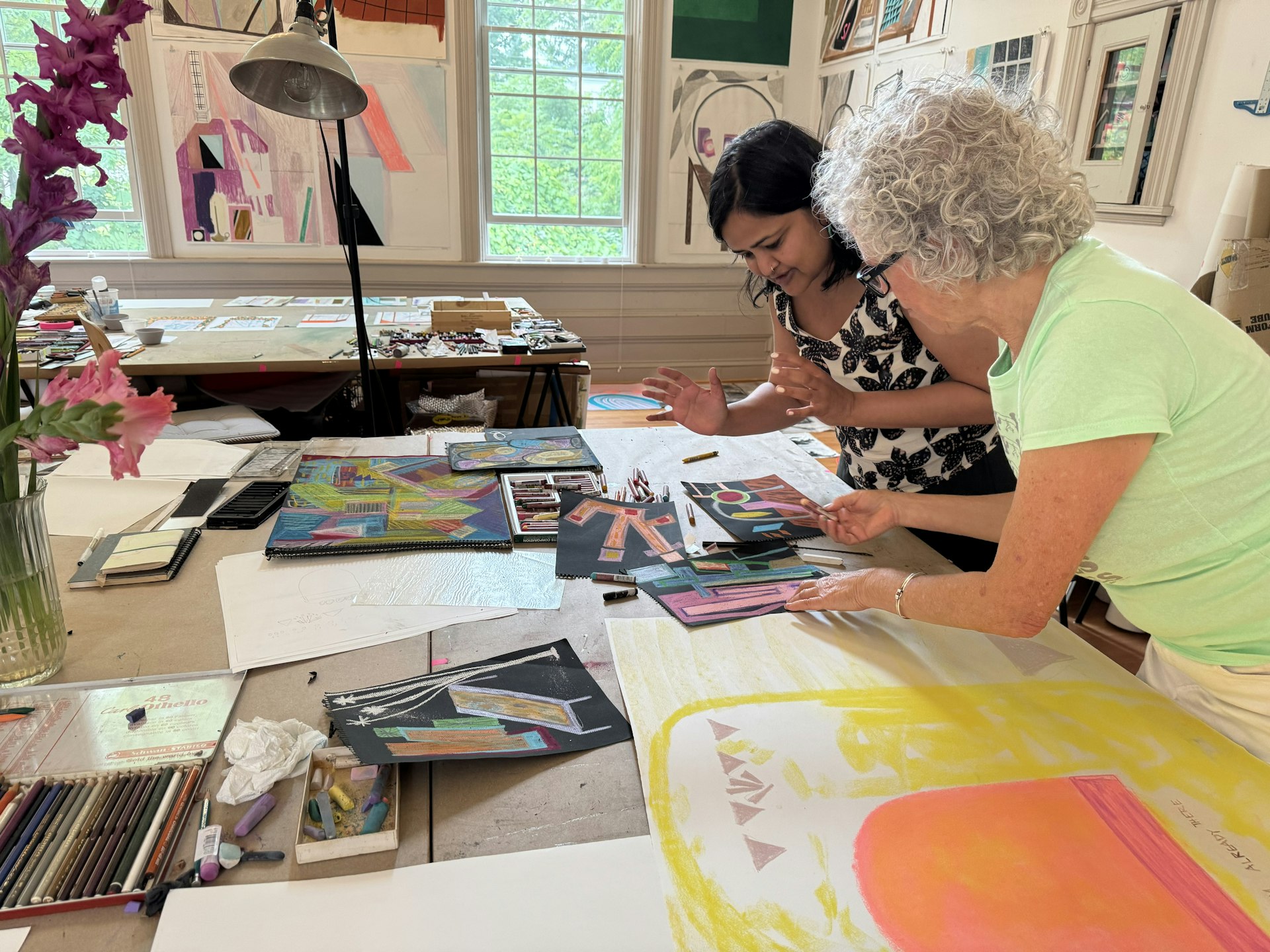
Make more accidents. Find eccentricity.
She shared this often and I’ve been thinking about this.
Most of adult life is designed around avoiding accidents. We plan. We optimize. We try to make the right decision. Even when we are being creative, we often carry that same instinct with us: make something good, make it coherent, make it look like what we imagined.
Michelle was asking me to do the opposite.
An accidental mark could become a beginning. An unexpected color could shift the whole composition. Something could be cut apart and used somewhere else. Instead of deciding what the finished thing should be, I had to let what was happening on the page tell me where to go next.
It was surprisingly hard. And incredibly freeing.
On the second day, an exercise involved picking a few forms and working with them. I picked the arch in the room, a green mirror, the chandelier, and patterns from the dress I was wearing. I used them to make a drawing around a feeling already on my mind—this feeling of a larger life or aspiration I was moving toward. The thought wasn’t new. But the way I could express or manifest it was.
That was when I started understanding what Michelle’s exercises were giving me. She was designing provocations that expanded my own language.
More freedom, more possibilities.
It made me realize that creative capacity often isn’t absent. It may simply be inaccessible because our habits keep leading us down the same paths.
Sometimes getting out of your comfort zone means deliberately working against your instincts, introducing friction and putting yourself somewhere unfamiliar. The unexpected thing that comes out is what leads to growth.
Stimulation and grounding.
I also came away with a better awareness about the relationship between creativity and grounding. The studio work was exhilarating, but it was also incredibly stimulating and tiring to constantly do things I would not normally do, working against my instincts.
Luckily, Michelle’s place is surrounded by rolling farmland. Goldenrods, wildflowers, corn, grapes growing along the road, cows in the distance. I had been doing yoga outside every morning, and I started realizing how much breathing, time outside, and simple, nourishing food balanced that for me.
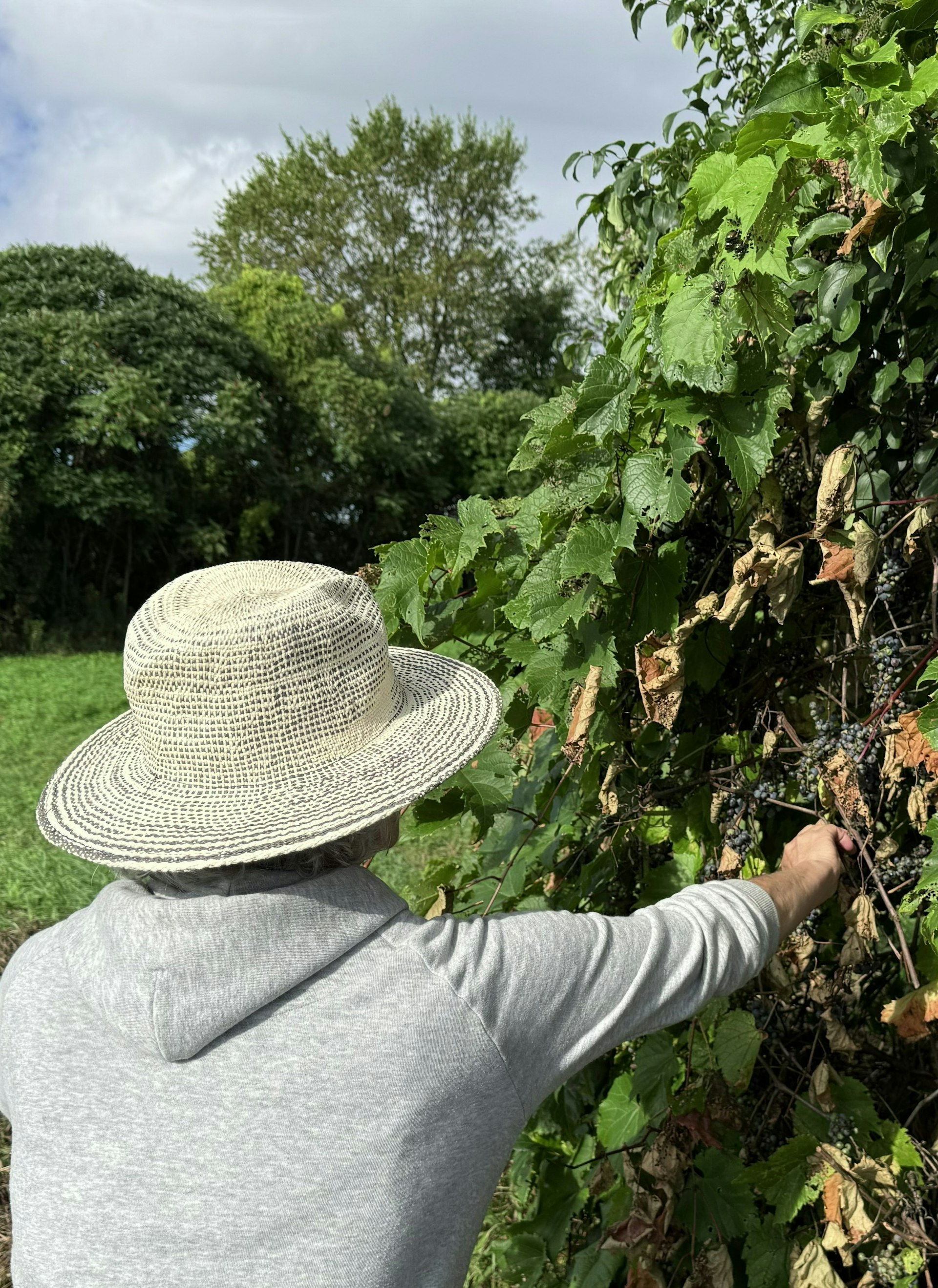
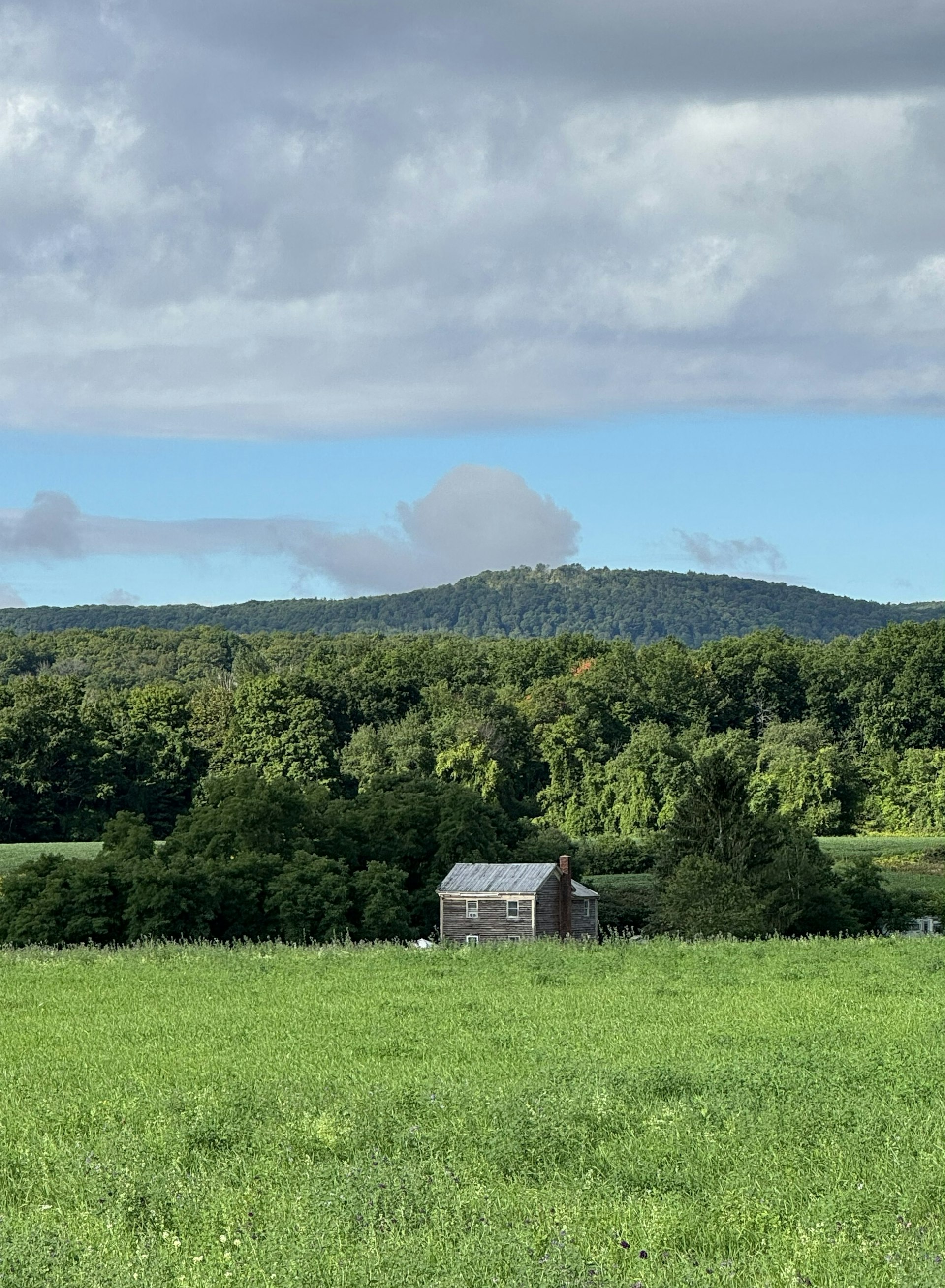
Getting back to earth and looking at the sky.
Through it all, I felt very supported. We shared meals and went on walks. Michelle baked bread and cooked delicious meals with vegetables and herbs from her garden. We had a lovely lunch with two of her friends who stopped by, both artists and teachers.
She also showed me around Sharon Springs and told me about its history—its old hotels, its past as a spa town, the new onsen coming up, and the restaurant in town frequently visited by famous authors and writers. I had spent years going north to the Catskills or Adirondacks without really knowing this landscape in between. I came home feeling like I had discovered another New York.
And somewhere in those three days, another idea became clearer to me: perhaps a rich life isn’t about being permanently calm. Maybe it is movement between stimulation and grounding.
It helped me recognize the same pattern in my life as a founder. My work is highly generative and stimulating, and it’s the grounding practices that allow me to sustain it.
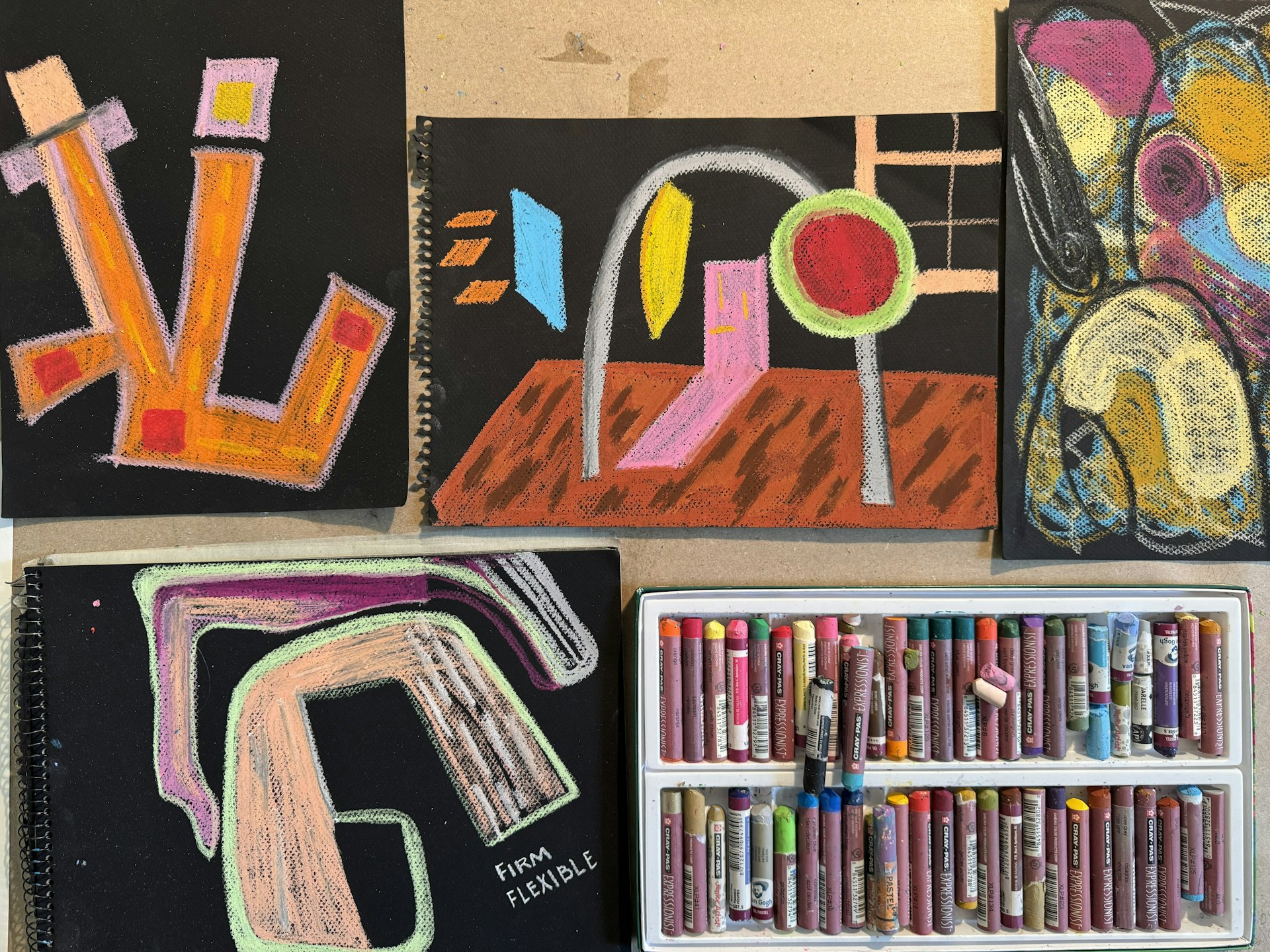
Exploring new marks. Making more accidents.
When I look at everything I made over three days, I am amazed.
I am amazed because there was no way I could have imagined making most of it before I came.
There was clearly so much more creativity sitting inside me.
Maybe that is what learning from a master can do. They use decades of their own practice to open doors you didn’t know were there.
And sometimes, the way through is simply to make more accidents.
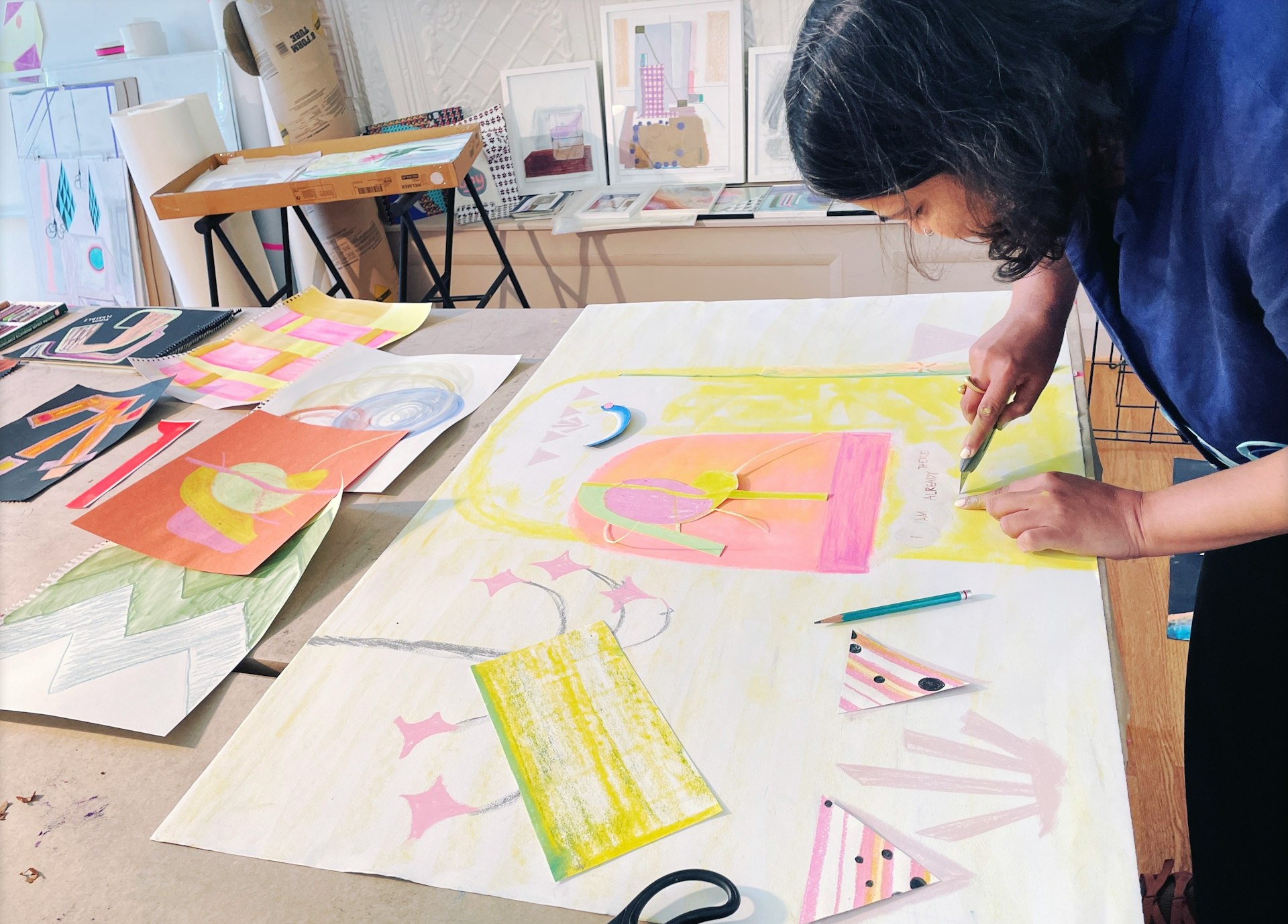
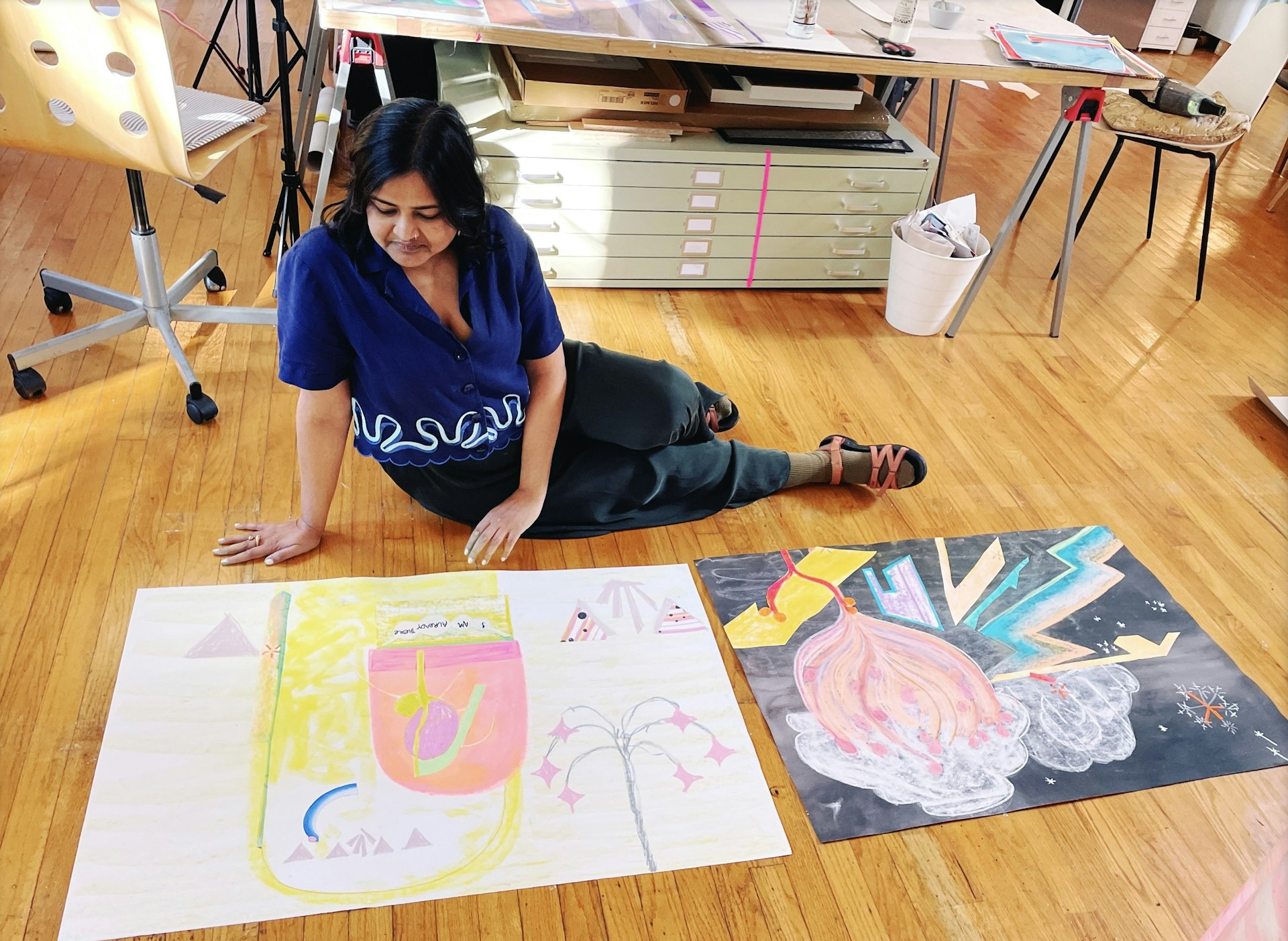
"I am already there."
Written by Geetika Agrawal
Learn about Michelle and her mini-apprenticeship here.
Explore all our curated artist apprenticeships worldwide and book one today.
Subscribe to our weekly newsletter to stay inspired with new artist stories and creative apprenticeships.